OSHIOMHOLE'S 'INGRATES'
------------------------------------
- Dan UGWU
Adams Oshiomhole helped Rotimi Amaechi to fight Senator Magnus Abe in Rivers state. Oshiomhole supported Kayode Fayemi to fight Segun Oni and Babafemi Ojudu in Ekiti state. Oshiomhole aided Nasir El-Rufai to get rid of Senator Shehu Sani in Kaduna state. Without Oshiomhole, Godwin Obaseke would not have even become Counsellor in Edo state. Oshiomhole also helped Abubakar Bagudu and Mohammed Badaru of Kebbi and Jigawa states. And today, they are all working against him. You know why? Every evil gang against truth does not last.
Today, Oshiomhole has helped Hope Uzodimma to get rid of Ihedioha in Imo state. I trust Hope. Tomorrow, Hope will help Rochas fight Oshiomhole. Gang up is the new tactical lexicon which Adams Oshiomhole has introduced into Nigerian politics. Thank you Adams. Nigerians will always remain spectators in this unfolding infamous drama. Amen.
Saturday, March 7, 2020

Thursday, March 5, 2020
AKU N'ESI OBI IKE: A CHRISTIAN DILEMMA
Does Christianity abhor material wealth? Is it possible to practice Christianity as a wealthy person without offending the mind of Christ her founder? What should be the Christian response to wealth, acquire or avoid it? Why did the early Christians abhor wealth, and saw rich politicians like Zaccheus as fallouts? Why did Christ tell the rich man to go and unction his belongings if he desires to follow him? In fact, why did he use the rich man to illustrate how difficult it will be to enter heaven? Is it possible for a Nigerian politician to be an ambassador of Christ? The bible talks about 'His riches in glory', not the earthly fortresses of princes.
Christianity speaks to the heart, and wealth resides in the heart too. The bible says, where the wealth of man is, there resides his heart, (Aku n'esi obi ike). In another place the bible says, "In his riches Man lacks Wisdom. He is like the Beasts that are destroyed". And the Word of God can only be understood by 'faithful' wisdom which the rich man lacks. If man cannot remove his heart from his wealth, if he cannot do without his riches, then it becomes questionable if he can actually practice Christianity, unless he wants to live by pretense. Wealth by acquisition or inheritance becomes antithetical to the faith. How best can we be Christians?
http://danchidiugwu.blogspot.com
Does Christianity abhor material wealth? Is it possible to practice Christianity as a wealthy person without offending the mind of Christ her founder? What should be the Christian response to wealth, acquire or avoid it? Why did the early Christians abhor wealth, and saw rich politicians like Zaccheus as fallouts? Why did Christ tell the rich man to go and unction his belongings if he desires to follow him? In fact, why did he use the rich man to illustrate how difficult it will be to enter heaven? Is it possible for a Nigerian politician to be an ambassador of Christ? The bible talks about 'His riches in glory', not the earthly fortresses of princes.
Christianity speaks to the heart, and wealth resides in the heart too. The bible says, where the wealth of man is, there resides his heart, (Aku n'esi obi ike). In another place the bible says, "In his riches Man lacks Wisdom. He is like the Beasts that are destroyed". And the Word of God can only be understood by 'faithful' wisdom which the rich man lacks. If man cannot remove his heart from his wealth, if he cannot do without his riches, then it becomes questionable if he can actually practice Christianity, unless he wants to live by pretense. Wealth by acquisition or inheritance becomes antithetical to the faith. How best can we be Christians?
http://danchidiugwu.blogspot.com
Wednesday, March 4, 2020
INEC'S SWANSONG:
A COMMISSION IN ITS SHADOWS
-------------
Dan UGWU
-------------
The Independent National Electoral Commission (INEC), set up in 1998 to oversee elections in Nigeria is running a risk of going defunct. If there is anything that poses threat to the continuous existence of democratic governance in Nigeria aside from the rising spate of insecurity and the dangerous trend of distrust among ethnic nationalities in recent times, the rate at which the Supreme Court now decides election outcomes and the perceived shortcomings of the Independent National Electoral Commission (INEC) have become matters of major concern. As the day goes by, its troubles increase in breadth and width. Right from the time of Euphraim Akpata, the Commission's premier chairman to these days of Mahmood Yakubu, INEC has been saddled with irregularities in matters of elections.
At the establishment of the current INEC, Justice Euphraim Akpata appointed by General Abdulsalami Abubakar had to deal with 26 political associations, giving only nine provisional registration as political parties for the 1998/1999 elections, eventually whittled down to three parties. Despite efforts to ensure free and fair elections, the process drew serious criticism from international observers. After Akpata died in January 2000, the government of President Olusegun Obasanjo appointed Abel Guobadia Nigeria's Chief Electoral Officer. Guobadia was responsible for the 2003 elections, which were marred by widespread violence and other irregularities to the glory of President Olusegun Obasanjo. In June 2005, Guobadia retired and was succeeded by Professor Maurice Iwu. Soon after being appointed, Iwu announced that foreign monitors would not be allowed during elections, but only foreign election observers. Sadly, Iwu's conduct of the 2007 elections was again criticized as falling below acceptable democratic standards, as the INEC almost superintended the worst form of election irregularities in Nigeria, to the point that he was identified with the PDP ruling party.
On 8 June 2010, Professor Attahiru Muhammadu Jega was nominated by President Goodluck Jonathan as the new INEC Chairman to replace Maurice Iwu. Jega faced fierce criticism from both the opposition and the ruling party. Jega's five-year term came to an end on June 30, 2015. Although he was qualified for re-appointment, the chances of such became remote given the allegations of bias against him by campaign officials of President Goodluck who passed vote of no confidence on him for having presided over their fallout.This is an abridged story of INEC, an electoral umpire that has encountered several controversies in the run-up to elections in Nigeria.
Apart from irregularities centred on common factors as shoddy preparations, ballot paper unavailability, unavailability of smart card readers and large cancellation of valid votes, INEC's crown of thorns has further been complication with court verdicts. This is the latest addition in the Commission's sad story, a development that is almost becoming a dirge to INEC's swansong. In the recent times, our beloved country has witnessed the tribunalization of our electoral process and democracy. Nigeria as a nation has had the highest number of electoral disputes in the world. It is only in Nigeria, that our election candidates or aspirants are determined not by the political parties or electorates per say, but by the courts which legislate on the outcome of party primaries and conventions. At times, the courts determine rightful party flag-bearers even months after the general elections, leading to sack of elected officers by the people. Our leaders and the courts also have a way of imposing candidates on the people. Even after the elections, we also go back to the tribunal for them to determine who has won. It doesn't happen anywhere in the world where the courts are saddled with such responsibilities that make the electorates irrelevant in matters of selecting their choice leaders, a situation that is making political offices appear as positions for the highest bidders and corrupt persons who have the whims and caprices to wangle their ways.
INEC, the electoral body that superintends over elections does not even have the authority to determine who wins and who loses. INEC reports are challenged by the aspirants who push them to court as defendants. Even the Nigerian police and other security agents appear more powerful, resourceful and reliable in elections as their reports have become more valuable and reliable than INEC's. In cases of irregularity and fraud, INEC's decision to exclude such units and votes for transparency and credibility are even challenged by some aggrieved aspirants. In the foregoing, they drag the Commision to court and the court adjudicates on their litigations, rendering INEC as toothless Bulldogs. Sadly, the commission has been involved in over 1,600 court cases arising from the February/March 2019 general elections. This includes 809 cases on pre-election matters and 807 cases on post-election litigations. Unfortunately, Nigerian judges are not essentially trained to determine winners of elections, and yet they have over a thousand cases to address all through election period. It does appear the courts have no more responsibilities than election matters in Nigeria. This is a very ugly development that has marred our democracy, making us the scorn among other nations.
As a matter of fact, the verdicts of the Supreme Court in the isolated governorship elections of Osun State held in September 2018, the Imo and Bayelsa State governorship polls and the conduct of INEC in the Kogi State exercise have continued to give political pundits and legal luminaries worry over the fate of Nigeria’s democracy should the trend continue. Several other Nigerians, using the Bayelsa and Imo states governorship elections and the final verdict of the apex court as a peg, have also expressed concern that Nigerian courts are gradually taking over the role of the election umpire, especially when it comes to determining winners in many contests. This is further complicated by the inconsistency inherent in some Apex court's decisions. For instance, in the judgement that sacked David Lyon the governor-elect of Bayelsa and his running mate Biobarakuma Degi-Eriemienyo on the grounds of alleged certificate forgery, was received across the board with mixed feelings because in a similar case involving James Faleke and Audu Abubakar in Kogi state, the court separated the deputy governor from the governor. The same court refused to give it to Faleke on the ground that he was not the governorship candidate but the deputy. In the Bayelsa case, the same Supreme Court joined and sacked them. Now, the governor who was chosen by the people is suffering for the sins of his running mate. The people of Bayelsa State have elected their candidate through INEC but the Supreme Court subverted their choice without recalling its earlier judgment that brought Yahaha Bello of Kogi State to power.
In Imo state, the Supreme court only succeeded in distracting and destabilizing governance by short changing the people's choice. Even after human right groups and well meaning Nigerians shouted wolf to the judgement that gave Senator Uzodimma victory, the court still went ahead to assert its judgement in favour of Uzodimma on the premise that the Supreme court cannot set aside its prior judgement. In the lead judgment delivered by Justice Kayode Ariwoola, the court held that granting the request of the applicants would open the flood gate by parties to all kinds of litigations. With this, it became clear that there was error and fraud in the entire process. In the interest of justice, the court ought to have set-aside its decision that was given in error and even issue a punitive measure to the plaintiff for misleading the court. But that was not to be, as the court ruled in favour of the candidate who has usurped an elective position by fraud. In these situations, the credibility of INEC has been put to question as an electoral umpire.
This is a time when the government will think properly what to do with INEC. Some Nigerians are calling for the replacement of the current electoral body with a better and well-organised one to manage its electoral processes. This is good especially when the Commission is intensified to improve on the current Electoral Act to address grey areas in the election process. But this will only be meaningful if the courts will no longer be the final determinant of the true representatives of the electorate after elections, otherwise it will tantamount to changing SARS to FSARS.
---------------------------------------------
* Dan UGWU writes from
Umunwoko Obokwu
Ozara Mbutu Mbaise Imo State.
danchidiu@yahoo.com
A COMMISSION IN ITS SHADOWS
-------------
Dan UGWU
-------------
The Independent National Electoral Commission (INEC), set up in 1998 to oversee elections in Nigeria is running a risk of going defunct. If there is anything that poses threat to the continuous existence of democratic governance in Nigeria aside from the rising spate of insecurity and the dangerous trend of distrust among ethnic nationalities in recent times, the rate at which the Supreme Court now decides election outcomes and the perceived shortcomings of the Independent National Electoral Commission (INEC) have become matters of major concern. As the day goes by, its troubles increase in breadth and width. Right from the time of Euphraim Akpata, the Commission's premier chairman to these days of Mahmood Yakubu, INEC has been saddled with irregularities in matters of elections.
At the establishment of the current INEC, Justice Euphraim Akpata appointed by General Abdulsalami Abubakar had to deal with 26 political associations, giving only nine provisional registration as political parties for the 1998/1999 elections, eventually whittled down to three parties. Despite efforts to ensure free and fair elections, the process drew serious criticism from international observers. After Akpata died in January 2000, the government of President Olusegun Obasanjo appointed Abel Guobadia Nigeria's Chief Electoral Officer. Guobadia was responsible for the 2003 elections, which were marred by widespread violence and other irregularities to the glory of President Olusegun Obasanjo. In June 2005, Guobadia retired and was succeeded by Professor Maurice Iwu. Soon after being appointed, Iwu announced that foreign monitors would not be allowed during elections, but only foreign election observers. Sadly, Iwu's conduct of the 2007 elections was again criticized as falling below acceptable democratic standards, as the INEC almost superintended the worst form of election irregularities in Nigeria, to the point that he was identified with the PDP ruling party.
On 8 June 2010, Professor Attahiru Muhammadu Jega was nominated by President Goodluck Jonathan as the new INEC Chairman to replace Maurice Iwu. Jega faced fierce criticism from both the opposition and the ruling party. Jega's five-year term came to an end on June 30, 2015. Although he was qualified for re-appointment, the chances of such became remote given the allegations of bias against him by campaign officials of President Goodluck who passed vote of no confidence on him for having presided over their fallout.This is an abridged story of INEC, an electoral umpire that has encountered several controversies in the run-up to elections in Nigeria.
Apart from irregularities centred on common factors as shoddy preparations, ballot paper unavailability, unavailability of smart card readers and large cancellation of valid votes, INEC's crown of thorns has further been complication with court verdicts. This is the latest addition in the Commission's sad story, a development that is almost becoming a dirge to INEC's swansong. In the recent times, our beloved country has witnessed the tribunalization of our electoral process and democracy. Nigeria as a nation has had the highest number of electoral disputes in the world. It is only in Nigeria, that our election candidates or aspirants are determined not by the political parties or electorates per say, but by the courts which legislate on the outcome of party primaries and conventions. At times, the courts determine rightful party flag-bearers even months after the general elections, leading to sack of elected officers by the people. Our leaders and the courts also have a way of imposing candidates on the people. Even after the elections, we also go back to the tribunal for them to determine who has won. It doesn't happen anywhere in the world where the courts are saddled with such responsibilities that make the electorates irrelevant in matters of selecting their choice leaders, a situation that is making political offices appear as positions for the highest bidders and corrupt persons who have the whims and caprices to wangle their ways.
INEC, the electoral body that superintends over elections does not even have the authority to determine who wins and who loses. INEC reports are challenged by the aspirants who push them to court as defendants. Even the Nigerian police and other security agents appear more powerful, resourceful and reliable in elections as their reports have become more valuable and reliable than INEC's. In cases of irregularity and fraud, INEC's decision to exclude such units and votes for transparency and credibility are even challenged by some aggrieved aspirants. In the foregoing, they drag the Commision to court and the court adjudicates on their litigations, rendering INEC as toothless Bulldogs. Sadly, the commission has been involved in over 1,600 court cases arising from the February/March 2019 general elections. This includes 809 cases on pre-election matters and 807 cases on post-election litigations. Unfortunately, Nigerian judges are not essentially trained to determine winners of elections, and yet they have over a thousand cases to address all through election period. It does appear the courts have no more responsibilities than election matters in Nigeria. This is a very ugly development that has marred our democracy, making us the scorn among other nations.
As a matter of fact, the verdicts of the Supreme Court in the isolated governorship elections of Osun State held in September 2018, the Imo and Bayelsa State governorship polls and the conduct of INEC in the Kogi State exercise have continued to give political pundits and legal luminaries worry over the fate of Nigeria’s democracy should the trend continue. Several other Nigerians, using the Bayelsa and Imo states governorship elections and the final verdict of the apex court as a peg, have also expressed concern that Nigerian courts are gradually taking over the role of the election umpire, especially when it comes to determining winners in many contests. This is further complicated by the inconsistency inherent in some Apex court's decisions. For instance, in the judgement that sacked David Lyon the governor-elect of Bayelsa and his running mate Biobarakuma Degi-Eriemienyo on the grounds of alleged certificate forgery, was received across the board with mixed feelings because in a similar case involving James Faleke and Audu Abubakar in Kogi state, the court separated the deputy governor from the governor. The same court refused to give it to Faleke on the ground that he was not the governorship candidate but the deputy. In the Bayelsa case, the same Supreme Court joined and sacked them. Now, the governor who was chosen by the people is suffering for the sins of his running mate. The people of Bayelsa State have elected their candidate through INEC but the Supreme Court subverted their choice without recalling its earlier judgment that brought Yahaha Bello of Kogi State to power.
In Imo state, the Supreme court only succeeded in distracting and destabilizing governance by short changing the people's choice. Even after human right groups and well meaning Nigerians shouted wolf to the judgement that gave Senator Uzodimma victory, the court still went ahead to assert its judgement in favour of Uzodimma on the premise that the Supreme court cannot set aside its prior judgement. In the lead judgment delivered by Justice Kayode Ariwoola, the court held that granting the request of the applicants would open the flood gate by parties to all kinds of litigations. With this, it became clear that there was error and fraud in the entire process. In the interest of justice, the court ought to have set-aside its decision that was given in error and even issue a punitive measure to the plaintiff for misleading the court. But that was not to be, as the court ruled in favour of the candidate who has usurped an elective position by fraud. In these situations, the credibility of INEC has been put to question as an electoral umpire.
This is a time when the government will think properly what to do with INEC. Some Nigerians are calling for the replacement of the current electoral body with a better and well-organised one to manage its electoral processes. This is good especially when the Commission is intensified to improve on the current Electoral Act to address grey areas in the election process. But this will only be meaningful if the courts will no longer be the final determinant of the true representatives of the electorate after elections, otherwise it will tantamount to changing SARS to FSARS.
---------------------------------------------
* Dan UGWU writes from
Umunwoko Obokwu
Ozara Mbutu Mbaise Imo State.
danchidiu@yahoo.com
Monday, March 2, 2020
When the Court Dictates on The Contrary
By Dan UGWU.
Ordinarily, if not for the communal, committed and concerted effort of Imo people who were bent on ousting the governor Rochas Okorocha’s dynasty and Oligarchy, it would have been a smooth sail for his crony; Ugwumba Uche Nwosu.
Just as it is normal with elections in Nigeria, litigations set in, Uche Nwosu took Rt. Hon. Emeka Ihedioha; the candidate of the PDP and who pulled 273, 404 to emerge governor as declared by INEC in the 2019 gubernatorial elections in Imo State from High court to Supreme court; Ararume took Ihedioha down to Supreme court; Hope Uzodimma took Ihedioha from High court to Supreme court as well.
Behind Uche Nwosu was Rochas Okorocha and Imo treasury. With Hope Uzodimma was Adams Oshiomhole and the APC militia. Ararume himself enjoyed the friendship of the Presidency to an extent, to the point that his stay with APGA was to be short lived.
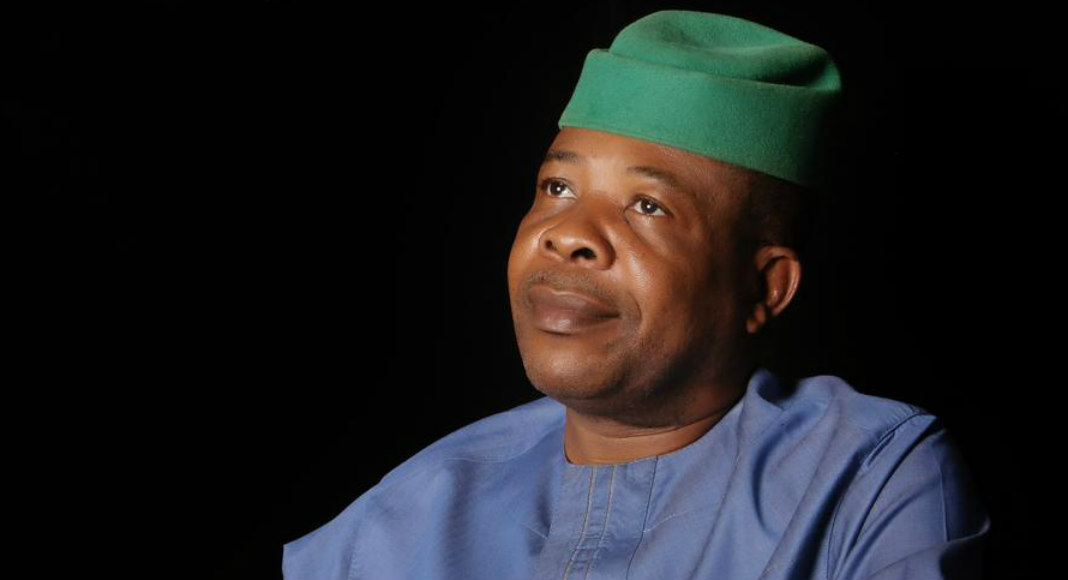
It was as if the elements caved in to assail just but one man who had no political sponsor and godfather in the entire process except the generality of Imolites. Just like the biblical David, Ihedioha was never afraid of the myriads set against him on every side. After all the bible said earlier that a thousand soldiers may fall at your side, another ten thousand at your right hand, but it will not come near you.
Barely 8 months into his leadership, the Supreme court struck with terror and upturned a judgement already adjudicated to Ihedioha’s favour by the lower courts. It was like a shot from the blues, Imolites woke up from their deep sleep. What was the news? Hope Uzodimma who had come 4th and who had celebrated Ihedioha’s victory against ‘Rochas family’ has been declared the duely elected governor. Reason: He brought forward to the supreme court alleged padded results from some 388 units situated in his wonderland.
It was not clear to Imo people. Even though Ihedioha had issued his acceptance of the judgement in a somewhat heartbreaking and quite sentimental tone, he was encouraged to apply for explanation and clarity from the hallowed chambers in Abuja. His application is scheduled to take place on March 2, 2020.

This is not all, Ihedioha’s victory in Imo as declared by INEC was the victory of Imolites. This was illustrated by the various ululative renditions spiced with trilling melodies across the state. But today, his sack, his failure to retain to power is gradually becoming his personal lot.
The many comrades who had worn his crested vest, caps and almost shortchanged their names with his, have almost deserted him to flock around the incumbent. Is that all? No. They have variously maligned him to a point of spoiling his political ambition in the bid to create relevance. What is his offence? He contested for governorship.
However, this later development is not shocking to some of us who had followed the acrimonious pattern of Nigerian form of leadership where ‘might is always wealth and right’. This form of desertation is not new to PDP. After all the party isolated itself from Olisa Metuh when the convict was almost robing every person into his witness box. The rest in this category is history.

By Monday, March 2, the Supreme Court will be expected to give its final statement on the earlier judgement. Two things stand in the variables. It is either he will be returned after various errors are itemized or he will still be sacked. In either of the variables, EMEKA IHEDIOHA will never be a failure either to himself, his homestead Mbutu, the Mbaise nation, his Owerri senatorial zone and the entire Imo state that gave him mantle.
After so many years in the Federal House, Ihedioha has made his Marks as an accomplished politician. No matter the picture his traducers and assailants project, Ihedioha remains a hero he is. If anyone doubts this, let him organize a ceremony where Imo political actors will converge and watch where Imo accolades will be emptied. Win or lose, he is made.
The situation has only offered Ihedioha an opportunity to know his real political friends and foes. Good a thing, Ihedioha still has numerous years ahead in his political future. This will be an opportunity to wean himself of all those ‘food is ready’ politicians.

With PDP, he still has a brighter future in Nigeria. Win or lose, Ihedioha must have the challenge of nurturing young and progressive politicians who will point to him as a godfather. Godfatherism can only be a vice in a morally bound institution, not in politics where there is broad day sponsorship.
At the end of the day, only those poor and political handicaped citizens are the ones who are left with him today. Apart from a few of them, all those heavyweights he rode with on a motorcade have since resumed duty in the camp of the opposition. After the review, we shall have time to address them and their future individually. In the meantime, when the court dictates on the contrary, only what God wants will happen.
----------------------------
* Dan UGWU writes fromUmunwoko Obokwu
Ozara Mbutu Mbaise Imo State.
danchidiu@yahoo.com
PENSION: WHEN OLD AGE IS A CRIME
Dan UGWU
In sane societies where old age is conceived as a rare gift, there is always the desire to get old quick so as to enjoy the benefits that accrue to the aged. In Europe and America where old people are regarded as senior citizens, the care given to the elderly is most unprecedented. Befitting homes and appropriate medical assist\nance are accorded to the old people as properly organized by their governments. This could account for the mad rush by Africans or rather Nigerians to these climes in search of the lucrative business of caring for the senior citizens.
Ironically, the desire for such jobs are not necessitated by their love for aged people but for the high premium placed on such jobs, otherwise, Nigeria would have been the better place to seek for the jobs as economic hardship and penury force so many into unmerited ‘old ages’.
Unfortunately, such care placed on old people in saner societies is not to be found in our own Nigerian society as there seem to be no end in sight to travails of the nation’s aged retirees. Often the media is replete with gory reports of the nation’s aged retirees waiting in vain after many years of retirement to be paid their retirement benefits and pension and dying in suffering and sorrow without accessing them. Nigerian media have been awash with news of many of pensioners collapsing in various parts of the country, some dying while standing in queue to collect their meager stipends. The story has been the same from the military to the police to the civil servants. Those who survive, frail and ailing old men and women, are frequently compelled to undertake odysseys from their villages to distant federal, state or local government headquarters for a tedious identification parade. This ritual is just to show themselves to the uncaring and arrogant pension officials to prove that they are still alive and deserving of the paltry stipend that cannot pay for their fares, food, medicare or shelter. This writer at least has aging parents who suffer such fate; hence this uncaring attitude of the government is recounted as seen and experienced and not as told.
Ironically, the desire for such jobs are not necessitated by their love for aged people but for the high premium placed on such jobs, otherwise, Nigeria would have been the better place to seek for the jobs as economic hardship and penury force so many into unmerited ‘old ages’.
Unfortunately, such care placed on old people in saner societies is not to be found in our own Nigerian society as there seem to be no end in sight to travails of the nation’s aged retirees. Often the media is replete with gory reports of the nation’s aged retirees waiting in vain after many years of retirement to be paid their retirement benefits and pension and dying in suffering and sorrow without accessing them. Nigerian media have been awash with news of many of pensioners collapsing in various parts of the country, some dying while standing in queue to collect their meager stipends. The story has been the same from the military to the police to the civil servants. Those who survive, frail and ailing old men and women, are frequently compelled to undertake odysseys from their villages to distant federal, state or local government headquarters for a tedious identification parade. This ritual is just to show themselves to the uncaring and arrogant pension officials to prove that they are still alive and deserving of the paltry stipend that cannot pay for their fares, food, medicare or shelter. This writer at least has aging parents who suffer such fate; hence this uncaring attitude of the government is recounted as seen and experienced and not as told.
Most painful is the fact that officials entrusted with management of pension funds unconscionably embezzle the funds meant to provide succor to the aged pensioners after retirement. The unending nightmare of fraud perpetuated on pension accounts is inflicting untold hardship and pains to retirees. They read on daily newspapers how their entitlements are embezzled by government officials who are suppose to manage their pension. One would think that after years of service to the government, retirees should have some pension to live on. It is probably too much to ask various government agencies to pay retirees a living wage considering the low level of economic activity in Nigeria but some level of pension to retirees should be a right after they put in required number of years of service. The monthly ritual of frail individuals who could barely work straight without the aid of a stick, some so old they shake while in a queue for several hours or days waiting to collect their check is a sickening sight for any sane person. Some of these pensioners have endured abuses and unconducive work environments while in service and now have to put up with months of waiting for their paltry gratuity. The worst part is that the pension backlog runs into months and years without any sense of urgency by the government officials who are suppose to better their lot.
This writer’s experience of two old pensioners who felt dejected at the Eke Ahiara UBA branch when after a long journey from their homes to the busy area, found out that their pension lifeblood have not been remitted yet. The old men nearly jumped out of their skin in frustration only to be aided by a sympathizer who underwrote their transport bills back home. Their repeated chants of “what have we done wrong to the government” as they clutched their hands beside their old cheeks was enough reason to place a course on the government. Such scenario is simply bad news for civil servants on their way to retirement and old age.
This writer’s experience of two old pensioners who felt dejected at the Eke Ahiara UBA branch when after a long journey from their homes to the busy area, found out that their pension lifeblood have not been remitted yet. The old men nearly jumped out of their skin in frustration only to be aided by a sympathizer who underwrote their transport bills back home. Their repeated chants of “what have we done wrong to the government” as they clutched their hands beside their old cheeks was enough reason to place a course on the government. Such scenario is simply bad news for civil servants on their way to retirement and old age.

This unconscious aversion and neglect for the elderly is not limited to government quarters. The group worst hit by this anomaly are religious men and women who devoted their whole lives to the service of the Church. Often time, there are no laid down policies designed to accommodate them. The situation appears as if old age is unrewarding despite the energy put in while vibrant. This could account for the reason why so many of them crave wealth to serve their old age demands since they have voluntarily denied themselves spouses and belongings. It is height time programmes are designed in view of caring for the old. Old men and women should not be made to regret having lives full of ages. In better civil societies, people clock hundreds and above with healthy hearts and mind. This is unlike our clime where life is celebrated as a rare gift at seventy.
It is true that the Nigerian pension scheme is fraught with problems as most pension funds are underfunded or simply not funded at all. Most have unsustainable outstanding pension liabilities with weak and inefficient pension administration. Most workers in the private sectors are not even covered by any form of retirement benefits arrangements. As the Buhari administration has commenced its second phase, there is need for reform of the system and this should include curtailment or elimination of high level of corruption in pension administration and the insurance that every worker receives his retirement benefits as at when due. Pensioners should not have to wait for more than one month after retirement to receive their first pay check. There is also need to empower the workers to save in order to cater for their livelihood during old age. Corruption which has become cancerous to Nigeria must be brought under control for pension reform to yield meaningful results.
---------------------------------
* Dan UGWU writes fromUmunwoko Obokwu
Ozara Mbutu Mbaise Imo State.
danchidiu@yahoo.com
NIGERIA: AVOIDING THE ROAD TO RWANDA
---------------------------------
#DanUGWU
#DanUGWU
This week is the commemoration of the 26 years of the Rwandan genocide, the racial massacre which took place in Rwanda between April 7 to mid-July, 1994. That was when the country became one big sepulchre, as hell enlarged itself, and people just streamed into it without obstruction. Indeed, Rwanda will never forget the weeks and months when the fields of Kigali, its capital, where brought to ruins and bloody wreckage. The waters turned crimson, and the rivers became rivers of blood, blood of human beings, not animals. Heaps upon heaps of corpses littered Rwanda, not in hundreds, not in thousands, but in hundreds of thousands. It was a spectacle that shook the rest of the world, dazed people to stupefaction, with its reeling shock and terror.

The keynote to the macabre development in Rwanda was Hatred, Suspicion, Insularity, lack of national cohesion and intolerance. The Rwandan genocide was a morbid attack involving two racial groups in Rwanda: The minority Tutsis, which had dominated the country’s leadership for a long time, and the majority Hutu who later came to power. The Hutu and Tutsi are two tribes who share a common past. When Rwanda was first settled, the people who lived there raised cattle like the Fulanis of Nigeria. Soon, the people who owned the most cattle were called “Tutsi” and everyone else was called “Hutu.” There were also the "Twa" which constituted a very small group of hunter-gatherers who also lived in Rwanda. At this time, a person could easily change category through marriage or cattle acquisition. It wasn’t until Europeans came to colonize the area that the terms “Tutsi” and “Hutu” took on a racial role, as herdsmanism has taken in Nigeria.
The Germans were the first to colonize Rwanda in 1894. Just like the Nigerian Fulani hegemony and oligarchy structure, the Germans looked at the Rwandan people and thought the Tutsi had more European characteristics, such as lighter skin and a taller build. Thus, they put Tutsis in roles of responsibility. When the Germans lost their colonies following World War I, the Belgians took control over Rwanda. In 1933, the Belgians solidified the categories of “Tutsi” and “Hutu” by mandating that every person was to have an identity card that labelled them Tutsi, Hutu, or Twa.
The event that sparked the genocide took place at 8:30 p.m on April 6, 1994. On this day, the Hutu–led president Juvénal Habyarimana of Rwanda was returning from a summit in Tanzania when a surface-to-air missile shot his plane out of the sky over Rwanda’s capital city of Kigali. All on board were killed in the attack including Habyarimana. To this, the Hutus said it was not ordinary death, that the Tutsis caused it by shooting down the plane; then entered the carnage. As at the time the morbid attack ended, over two million Rwandans, mostly Tutsis were grounded to the dust.

As Rwanda marks 26 years of the genocide, the heavens are weeping again. But this time, not for Rwanda but for Nigeria. The heavens are weeping for Nigeria’s level of hate, Suspicion, Insularity, Lack of national cohesion, injustice, loot and intolerance which were the prelude to the macabre dance in Rwanda.The situation envokes similar trajectory with which the Rwanda genocide was waged. As it is going now, all the variables that sparked the genocide 26 years ago in Rwanda are replete in Nigeria. Talk of hate; we have it in prodigious quantity among the ethnic nationalities. What of Suspicion? That is the middle name of Nigeria; Religious and Racial intolerance is the water most Nigerians drink daily, they even bathe in it to quench the thirst of love.
Unfortunately, the warlords in the guerrilla warfare use religion as a cloak to achieve their sinister motives. Here in Nigeria, due to the theatre of the absurd created by the incompatibility of professed tenets and the gruesome activities of religious fanatics, religion no doubt has been given a bad name. Religious and ethnic identities create strong passion and as such are susceptible to exploitation to advance selfish and egocentric interests. There are those who adduce sociological and psychological reasons to account for all that happen in Nigeria. They try to interpret the sad phenomenon as a by-product of mass discontentment and frustration among the jobless and hopeless hordes of people that roam about Nigerian streets in hunger. For some others, there is strong underhand fanatical arrangement and determination to convert or wipe out infidels from Nigeria. A case at hand is the inter-state Almagiri politics. In this process, bigotry takes the place of religious tolerance. Social anarchy, poverty and neglect caused by marginalization of groups of people from the social, political and economic mainstreams of the nation take the place of order and stability.
Well meaning Nigerians have watched with unease and disquiet how religion and mass hatred are becoming a tool in the hands of some politicians and non-politicians. Whatever administrative and legal action taken in Nigeria is almost wearing the racial toga. The COVID-19 pandemic holding us hostage is not an exception to this malaise. If government does not expunge these suspicions, build trust in the people, then we all are firmly on the road to Rwanda. If Nigerians do not spare a thought to tolerance, then we are sailing to Kigali. If this country continues to emphasize fault lines, play on our centrifugal forces like ethnicity, language, clan, religion, all because they want to rule, soon, we will find out that there’s no country to really rule over again. If we continue to politicize everything, even people’s security and life, then the debris of the Nigerian explosion will be nothing compared to the Rwandan version of the genocide. The cohesion of the country may have been destroyed badly now, but we still trudge on, but if Nigerian elites continue to fan the embers of discord, intolerance and hatred, then the rickety contraption we have will not continue to hold out. Things may fall apart, and the rest of the world will just say of us: truly there was a country called Nigeria.
---------------------------
http://danchidiugwu.blogspot.com
YEARS AFTER: Achebe, His Works And History
By: Dan Ugwu
 March 21st, 2019 was the 6th anniversary of the death of Chinualumogu Achebe, a novelist and essayist, a man of ideas who bowed to the invitation from the Elysian Fields at 82 on March 21, 2013 at a hospital in Massachusetts, USA. Achebe died with the burden of a seer, a change agent whose literary pouch brims with warnings that can chart a new course for national rebirth.
As a man who lived and died in the service of humanity, the literary prodigy distinguished himself from his peers because of his uncanny knack for constantly peering into his country’s rabidly complex political and cultural milieu, deeply foraging into the mystical, and dwelling in the epiphanies of human experience and life struggles for churn out messages that illuminate the dark recesses of his fractured society.
So distraught was Achebe with the Nigerian system and those who run it that he chose not to connive with the ogres raping his motherland by twice rejecting national honours conferred on him.
Achebe used his works to point out the grey areas needing attention in our politics. His writings served as adequate revolution for him to articulate his people’s culture and help the African society regain its belief in itself and put away the complexes of the years of denigration and self-denigration.
This is part of his contribution to the task of giving back to Africa the pride and self-respect it lost during the years of colonialism and to seek a way to repair the disaster brought upon the African psyche in the period of subjugation to alien races.
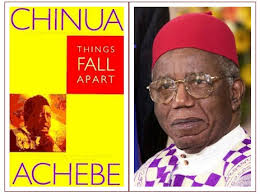 The first shot of this gift came in 1958 with the publication of his magnus opus, “Things Fall Apart”; the celebrated classic novel which became the rave of the moment, enjoying fascinating reviews across the broad spectrum of literary critics in international journals and mainstream publications.
It was the 1958 book that defined Achebe who has about 20 books to his credit as the father of modern African literature because he appeared to have told the African story with a native Igbo flourish.
The novel depicts the life of Okonkwo, a leader and local wrestling champion in Umuofia, one of the fractional groups of nine villages inhabited by the Igbo people. In this novel, Achebe described the custom and society of the Igbos, and the influence of British colonialists and Christian missionaries during the late 19th century.
 Things Fall Apart was followed by a sequel, “No Longer At Ease” published in 1960, originally written as the second part of a larger work together with Things Fall Apart and Arrow of God which came in 1964, on a similar subject. Obi, the hero of “No Longer at Ease” is the grandson of Okonkwo, the tragic hero of Things Fall Apart.
The author further recreated a new setting for Arrow of God. There are both thematic and ancestral affinities among the troika. In Arrow of God, one notices the highlight of cultural attitude with a seemingly similar theme, setting and characterization as in Things Fall Apart.
 Little wonder people regard Arrow of God as another Things Fall Apart. In Arrow of God, Achebe filled the gap created in his first novel which he saw as necessary before moving into the contemporary scene.
In doing so, he was able to portray the Igbo society under stress, a stress which is symbolically represented in the jealousy of Nwafo for Edogo, in the perennial quarrels between Ugoye and Matefi and similar actors.
Achebe completed his vivid portrayal of the beauty and rhythm of African life with Arrow of God and ventured into the contemporary Nigerian scene two years after in 1966 with the publication of “A Man of the People”, a searing political satire that stripped bare the stinking closets of the band of predators who masquerade as political leaders in an unnamed neo-colonial African country. A Man of the People captured the recklessness of politicians and the endemic corruption in the nation’s political life.
In this book, Achebe foresaw what might eventually happen to Nigeria’s First Republic. As a seer he was, his predictions came true when the military toppled the government in January 1966.
In the book, he taught that individual honesty, integrity and greater efficiency in public affairs can transform a society when the system remains unchanged. But for refusing to heed to Achebe’s warnings in the book, what was Nigeria’s lot? Series of coups and successful military regimes that punctuated her democratic rule.
Till today, the wounds of prolonged military rule are yet to fully heal in a nation where scars of an avoidable civil war that plagued it are also open for all to see. The impossibility of abating Nigeria’s quagmire seemed to have led to the birth of “The Trouble with Nigeria;, a lucid book that excoriated the vulgarity of governance in the Second Republic during the exceptional inept administration of former President Shehu Shagari between 1979 and 1983.
“The trouble with Nigeria is squarely that of leadership” says Achebe. Despite the fact that the book coincided with the 1983 general elections, the vampires still went ahead to rig the polls, and the rest is history.
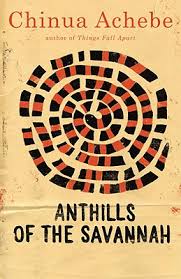 Alarmed by this dishonesty, chicanery and weakness of the political elite, Achebe in 1987 once more demonstrated his ability to predict correctly when he released his “Anthills of the Savannah”, a novel about a military coup in Kanga, a fictional West African nation.
One thing stands the book out: expression of optimism in the ability of Africa to transcend its perennial limitations. Consequently, in October 2012, Achebe once again stirred the hornets net with the release of “There Was a Country: A Personal History of Biafra”. This was his last offer to the Nigerian society in his life time which tore open bitter controversies about the roles some leading characters played during the civil war. He did not intend to arouse animosity or open up old wounds, but rather to create awareness as he said, “for the unborn children.”
 Six years after Achebe’s death, much of his literary advice have remained unheeded as corruption and leadership still remain the trouble with Nigeria. As a victim of colonialist piracy, Nigeria has suffered from a high degree of exploitation; as a victim of internal colonialism, she has been reduced to a veritable paradox.
Unfortunately, the culture of impunity occasioned mainly by power aphrodisiac has opened the floodgates for plundering government’s till. There is wide spread acrimony arising from visible inequalities and social disorder, intolerance, mistrust, bigotry, unhealthy propaganda, deepening hatred and hate speech, rapid deterioration of relationship between the peoples of the different geopolitical zones and other myopic sentiments.
There is a wide margin between the powerfully endowed politicians with sophisticated wealth and the educated and non-educated poor of the society. All these could form a catalyst for a revolution; a revolution which will take a measure where the poor will not only demand for their share of bread but commandeer it.
It will be sudden and involuntary. There will be no leader of the rebellion or anyone directing them to act. Hunger and the survival instinct will be the propelling force. And by then, the so-called affluent in the society will either be compelled to examine the plight of the poor or flee from their wrath.
The situation appears to be quite like an earth tremor signalling a dangerous earthquake. The only way to abort any upheaval or revolt of the poor is for the wealthy leaders to heed to Achebe’s call by turning a new leaf and beginning to spare a thought for Nigeria’s less privileged. Rest in peace, Chinua Achebe.
Subscribe to:
Posts (Atom)